


Thanks to Navattic, who presents this issue.
Interactive demos are one of my favorite self-service levers, they let someone feel the value of your product before a rep ever gets on a call. Navattic just launched their MCP, so Claude can build and update those demos for you.
The new Skill Library is the fun part, exec summaries from demo analytics, persona script adapters, share-link follow-ups, etc.
In this piece, we’ll cover five important decisions to help you build a product-led growth strategy from scratch.
These are the same decisions I worked through as a former 2x head of growth that helped drive 1m+ free users and 100k+ paying customers.
It’ll help you figure out where the leverage is, and along the way, avoid some of the common speed bumps where even good teams get stuck.
The order you work through these matters too, because each answer influences the next decision.
IE, if you haven’t defined activation, it’s hard to figure out where users are leaking out of your model. And if you don’t know where the money’s leaking out, you might spend a lot of time prioritizing the wrong problems.
So let’s go in order.
Decision 1: What counts as activation?
Activation is an industry term, a fancy way of saying the moment when a user first gets real, tangible value out of the product.
It’s a binary moment.
Either they activate and experience that value, or they don’t. And if they don’t activate, they’re probably not coming back.
You’ve experienced this yourself.
When you sign up for a new tool and don’t understand what it does, or it doesn’t seem like it’ll help with whatever goal you had when you signed up, you leave.
You poke around for a few minutes, you leave, and you probably never come back.
The data confirms this. When people don’t activate, retention from first use into ongoing usage is very poor, and the likelihood they convert into a paying customer is almost zero.
That’s why activation ends up becoming a north star metric for most product-led growth teams.
We can’t reach through the screen and tell somebody to pull out their credit card. But we can provide an amazing experience that gets new accounts to that value as quickly as possible.
When we do this, my own experience has taught me that people who activate convert to paid subscribers at about 5 to 7x the rate of those who don’t.
Which means defining this metric is a decision that gets argued and debated a lot.
Product has an opinion, because they’re building the tool. Marketing has one, because they tend to be closer to the user and the user’s goals. The founder and exec sometimes have a more forward-looking, aspirational definition.
If you’re at an early-stage company, this is even harder.
Because you probably don’t have enough quantitative data to do a proper look-back analysis and see which moments in the user journey correlate with purchase. So what happens is the person with the loudest opinion, or the highest title, or the most tenure, usually wins the debate.
When I joined Postscript, we were basically in this exact spot.
I was employee number 11. And we had a few million in ARR. A couple months after I started, we had a company offsite, and a handful of customers came too.
As the head of growth, I asked them all the same question:
“Could you take us back to when you first signed up. What was the first time that you felt you really got value from the tool?”
And internally, a lot of us expected the answer to be “when I sent my first campaign.”
Because Postscript is an SMS marketing tool for Shopify brands (although they’ve recently announced they’re launching email too), and all of our messaging and onboarding at the time was built around getting people to ship their first outgoing message.
But every customer said something different.
They didn’t care about sending the campaign. That was cool, but it was a stepping stone. What they really cared about was the first purchase that came from a campaign they sent through our platform.
Intuitively, it made a lot of sense. They cared about generating revenue.
Once we understood how they described the moment of value, we rebuilt our onboarding around it. We retooled the in-app flows, redesigned the blank states, updated the microcopy, changed the onboarding email, even updated some ad copy, because we understood the value point with more nuance. We built templates that helped people get revenue-generating campaigns live as fast as possible.
If you’re doing this for the first time, here’s what to know:
Activation is usually different from setup. Entering your information and getting your account configured typically doesn’t provide value on its own. Activation happens when someone uses your product to solve the goal that got them to sign up.
It’s a leading indicator. The goal isn’t activation for its own sake, it’s that activation correlates highly with purchase. Increase the number of people activating, and how quickly they do it, and revenue tends to follow.
Early-stage companies won’t have the quantitative data. Do the qualitative work instead: interviews, user testing, customer conversations.
The thing you want them to do and the thing they actually care about are usually two different events. Yours is the stepping stone. Theirs is the payoff.
Reach out to five or ten recent customers and ask a version of: “What was the first moment you felt like you got value out of the product?”
Phone, in-app pop-up right after they convert, an email with one question in it, whatever works.
And don’t lead the witness.
IE, don’t offer a dropdown of predetermined answers. Ask open-ended questions so you can see answers in their terms. And look for the answers you hear most often. Customers will use different words to describe the same event.
Once you have that moment defined, get laser focused on getting more people to it faster.
Decision 2: Where you’re losing the most users
At a lot of companies, nobody has actually written down or diagrammed what the user journey looks like.
So when people ask how to grow faster, the easy answer is always “get more signups, more leads, more top of funnel.” Signups are the easiest thing to point at, and whoever owns acquisition gets the pressure.
But in my experience, the real leakage is usually somewhere in the middle of the funnel.
If you only focus on top of funnel without understanding what’s happening downstream, you’re pouring new signups into an experience that isn’t giving them much value.
I’m advising a team right now that generates hundreds of thousands of trial signups a month, but converting only a small percentage, low single digits, into paying subscribers.
Their marketing team is under pressure to acquire even more, but the data makes it clear that something later in the journey is broken. No amount of new signups is going to fix that. We spend time digging into where exactly the leak is; the setup process, the activation journey, the checkout or free-to-paid conversion, pricing, friction somewhere in the experience.
You need to understand the root cause instead of trying to acquire your way past the problem.
Sometimes this shows up differently.
I’m working with a head of growth at an early-stage, founder-led startup who was stuck building whatever his founder got excited about that week. The founder would talk to other founders, scroll X or Reddit, come back with ideas, and pressure the head of growth to execute, essentially forcing him to work off hunch and intuition.
We spent time helping him diagram the user journey and understand the growth model, so he could finally say, “Not right now, we’re doing this other initiative, here’s why it matters more.”
It unlocked leverage for him as a leader, and it solved some of the interpersonal dynamics too, because he finally had the information to back up his calls.
Here’s what to do: create a written version of the user journey.
Diagram how someone visits the site, signs up, activates, converts from free to paid, and ideally expands or upgrades over time. Put the conversion rates, or raw numbers, next to each step.
It should look something like this example:
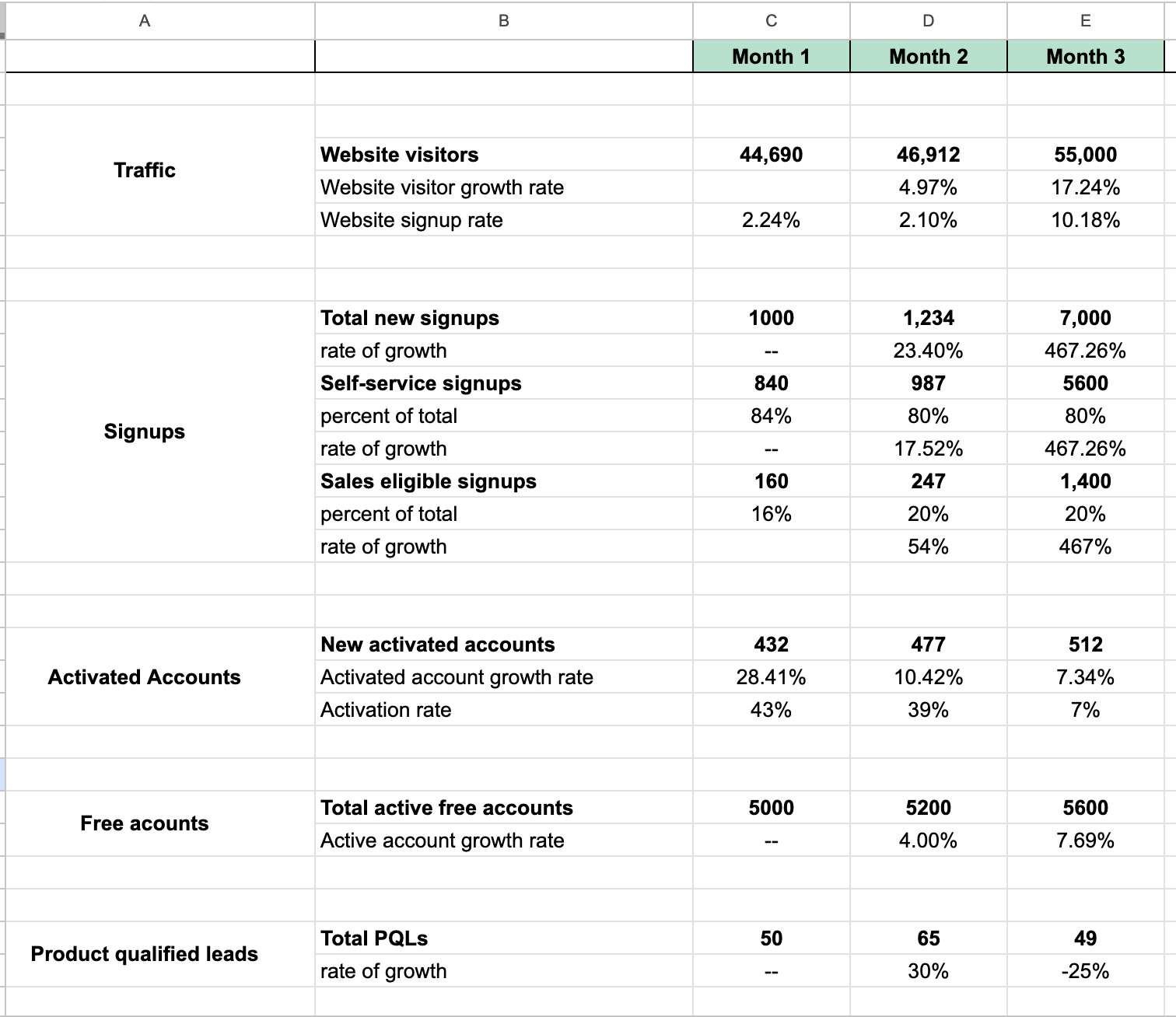
Then compare your numbers to public industry benchmarks. Lenny’s Newsletter and OpenView both publish good ones with different ways to filter.
Without that information, your prioritization decisions come down to comparing hunches and opinions, and in that environment, the person with the most tenure and confidence wins.
Decision 3: Where you’re losing the most money
This is the one I find a lot of people skip, and it’s a different question than where users are leaking.
Where you’re losing the most money, and where the financial leverage actually is, often has a different answer.
Activation is easy to prioritize. It’s probably the most fun project in growth.
It has a fast feedback loop, you get to watch real people interact with your product, dig into cohorts, run experiments, do interviews, and see behavior change almost in real time. It’s the project everybody around you assumes growth is supposed to work on.
But it’s not always the most impactful part of the revenue model.
I learned this firsthand at Wistia. I was leading our growth team with a mandate to get more revenue from more paying customers, and activation was the obvious focus, until we did a deep dive into the data and found two opportunities we’d missed.
One: we could probably raise pricing a little, and a small increase in average revenue per customer could move total revenue by a substantial amount.
Two: we had a massive opportunity in customers who weren’t upgrading or increasing their average contract value over time.
Both were pricing and packaging problems.
So the team paused the activation work and ran a nine-month revenue focused sprint.
We A/B tested a range of pricing models to balance new customer acquisition against upgrade revenue, added feature-based upgrades and some usage-based pricing, and once we landed on the new model, migrated more than 10,000 existing customers into it.
Of everything I did in 4+ years at that business, nothing had the impact that pricing and packaging did.
A few things I took away from that:
Model the dollars behind each growth lever before you pick one to focus on. A 5% price increase and a 5% activation lift don’t produce the same revenue.
Users and dollars leak in different places. Some parts of your growth model convert well but bring in a bunch of people who were never going to buy.
The most fun project and the most impactful project are two different questions. Ask both.
Pricing and packaging work is slow. It requires a ton of alignment. Budget months, maybe years, not weeks.
Create a growth model. Take your revenue goal for the year, map how users flow through it, put a rough dollar figure next to each stage, and sort by size and impact. Be honest about where you’re already planning to focus, and compare it to where the actual revenue opportunity is.
A lot of clients come in thinking they need more activation or acquisition, and end up finding more leverage deeper in the model: pricing, packaging, upgrade revenue, churn.
Decision 4: Balancing sales and self-service
One of the biggest misconceptions about PLG is that it means no sales.
In reality, it means the product is the primary go-to-market tool for acquisition, activation, and conversion… but not the only one.
Missing this distinction causes a lot of internal friction.
Most mature, high-volume PLG companies run both motions: a freemium path where people sign up and buy on their own, and a sales team that works one-on-one with a subset of accounts.
The challenge is that some accounts were always going to buy on their own, and adding sales to that process just adds friction, slows things down, and costs money without making the deal bigger.
And the flip side is true too... Some customers were never going to buy on their own, whether because of custom needs, questions, or a preference to talk to a human, and if you don’t catch them, you leave a sale on the table.
The goal is to grow the total number of customers, not just shift the same customers and revenue between the sales pocket and the self-service pocket.
I’ve had a version of this conversation at every company I’ve worked with, in-house and as an advisor.
Sitting down with the head of sales, we typically work through four questions:
What are the indicators that someone wants or needs to talk to a human?
Where in the user journey do those indicators show up?
Where on the website should we push people toward one path versus the other?
Where in the product can we insert those offers so it stays one consistent experience, even though we’re managing multiple pathways?
That last point it’s really important. Because it should feel like one experience to the user, even if you’re managing several paths behind the scenes.
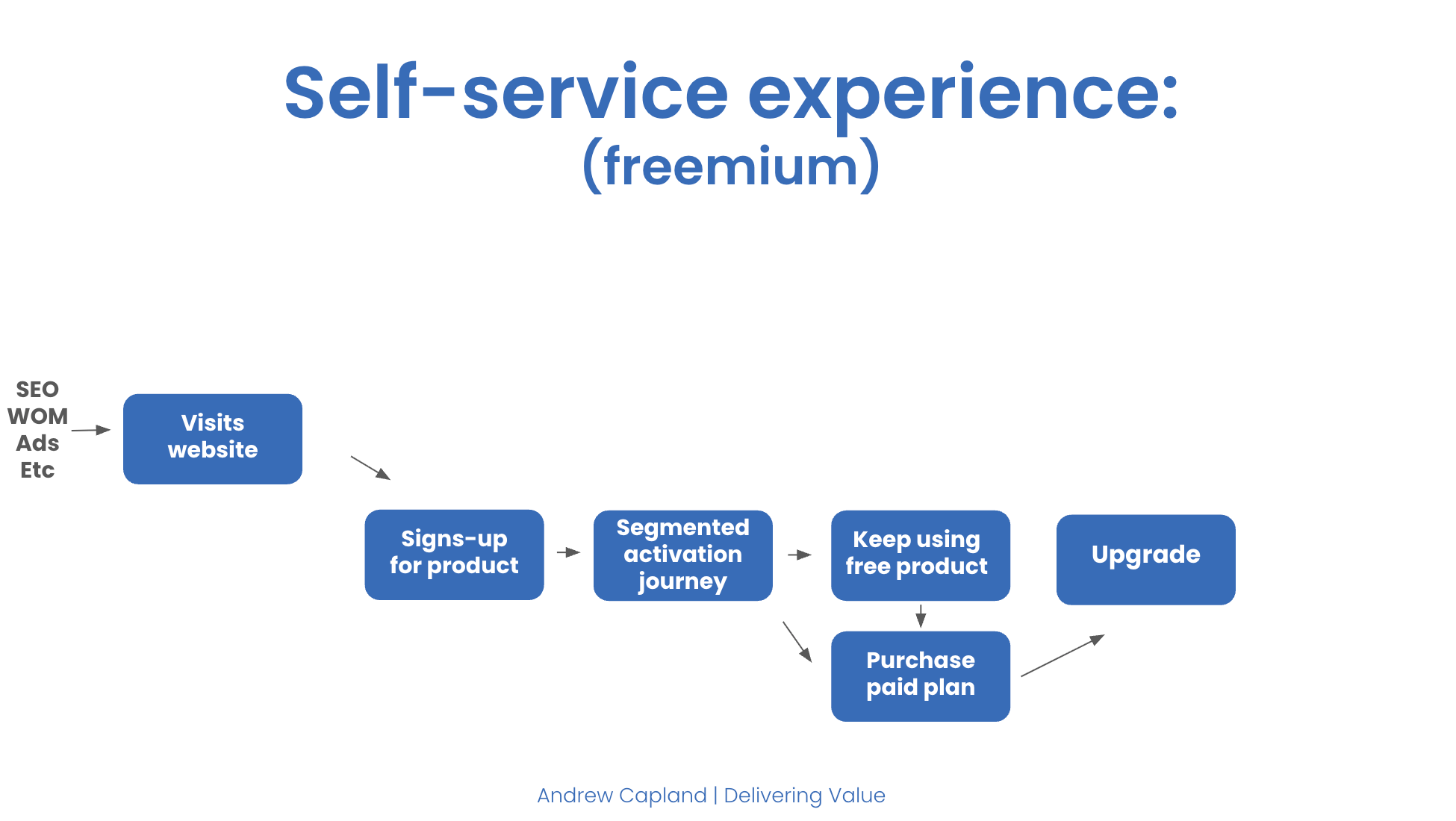
Picture two funnels.
The self-service funnel: someone visits the site through SEO, LLMs, word of mouth, or ads, signs up for the product, goes through an activation journey, and either stays on the free plan or converts to paid and upgrades over time.
It looks something like this:
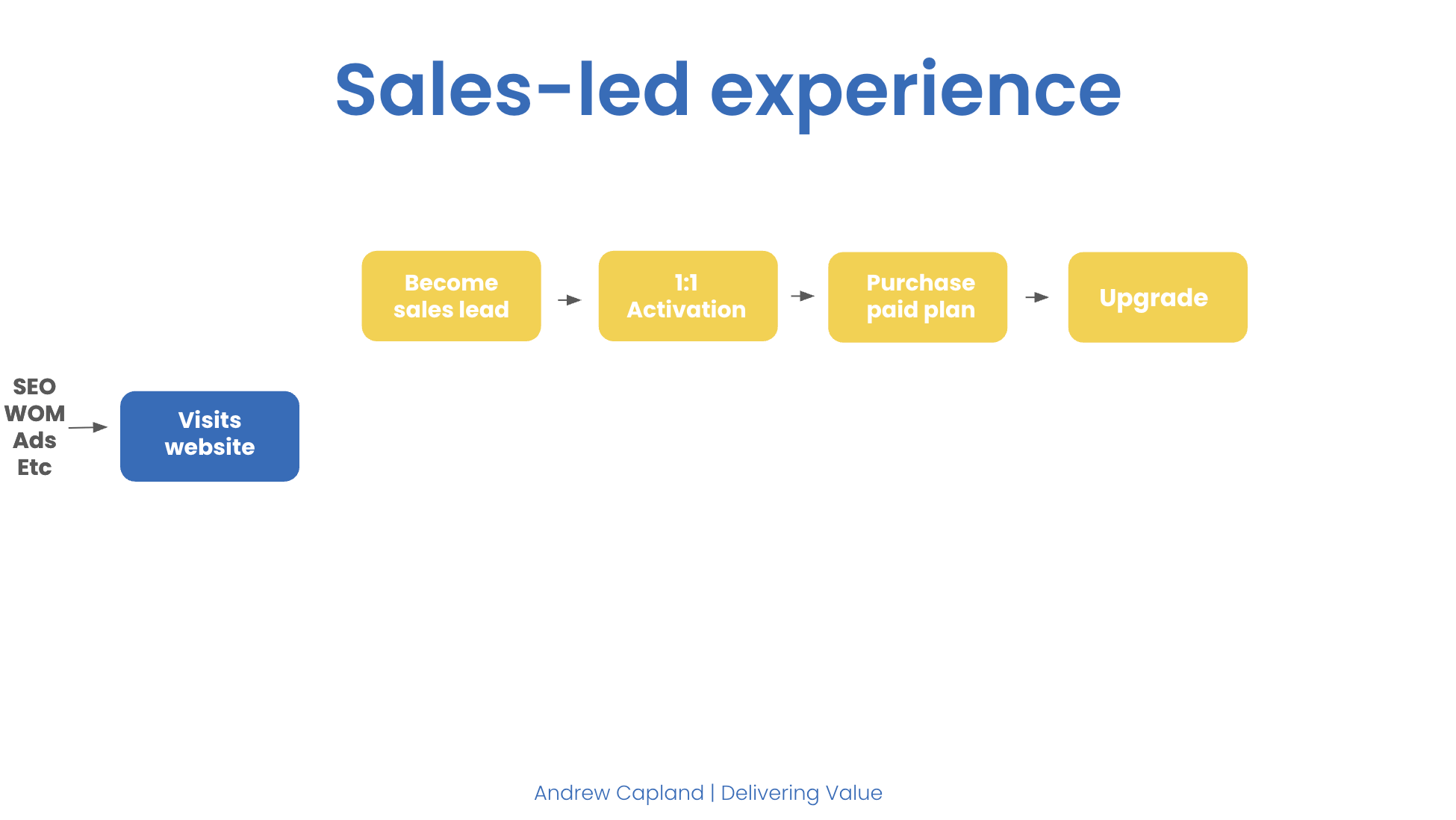
The sales-led funnel: someone visits through the same channels, but becomes a marketing lead and then a sales lead, goes through a qualifying process, gets a one-to-one activation and purchase experience, and has a human involved when it’s time to upgrade.
That looks something like this:
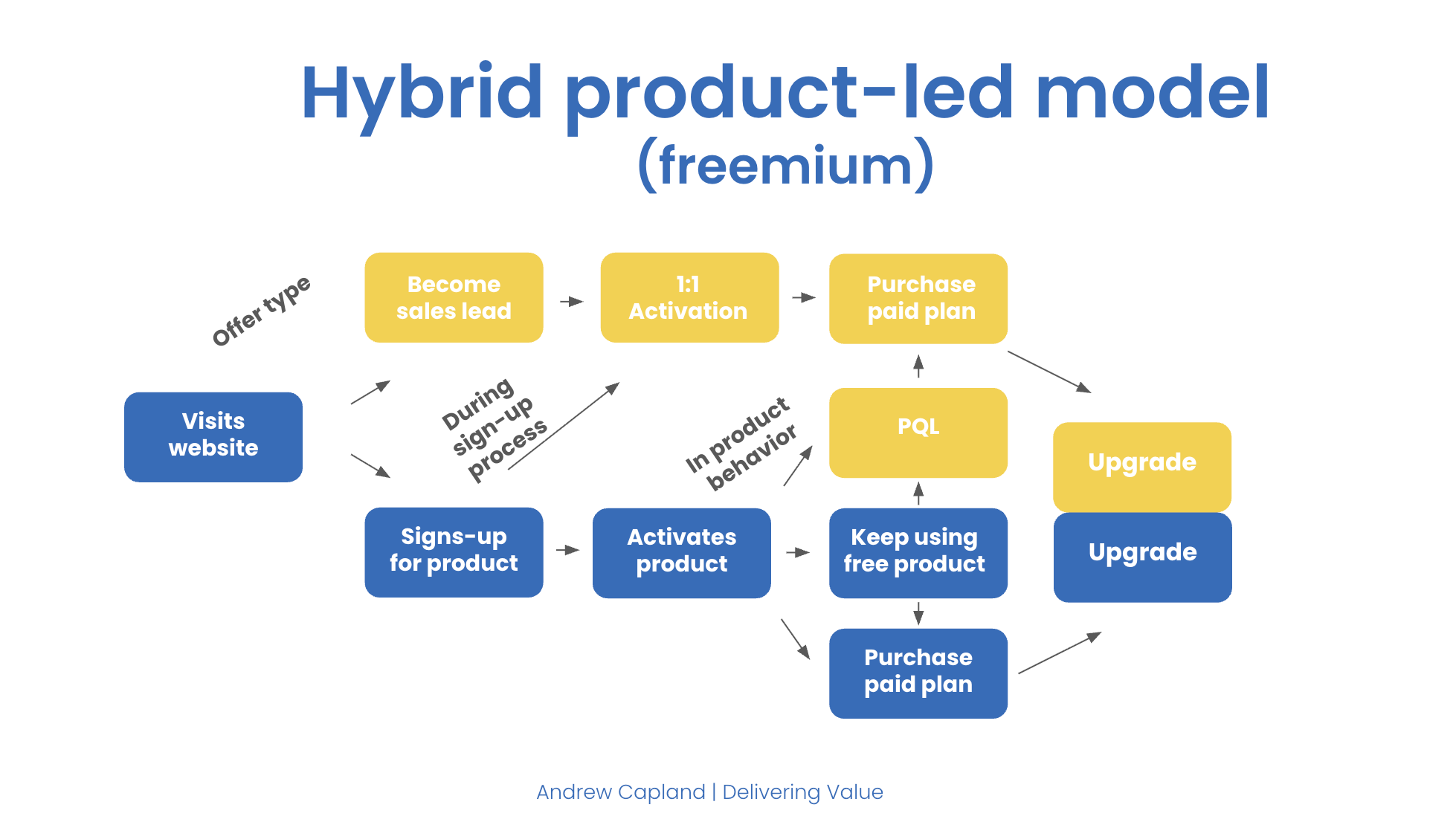
A mature hybrid company runs a modified version of both, with a few extra connections between them: moments where you decide which funnel someone belongs in. The sales-led side also gets a new lead source once you have a free plan: product qualified leads, PQLs, where product usage data indicates someone might be sales-ready.
That full system looks something like this:
I actually walk through the diagrams for these two funnels on screen in the video version of this. If you want to see them side by side instead of picturing them, watch it here:
There are three moments where important routing decisions gets made:
Offer type. Did someone sign up for a demo or price quote (sales), or to use the product itself (self-service)? Someone can self-select into sales straight from the site.
Sign-up enrichment. Information at sign-up, like a specific high-value use case, a sophisticated-seeming user, or an enterprise plan or page, might indicate this person needs a one-to-one experience even though they signed up self-service. They keep full access to the product, and you add a one-to-one nurture layer alongside it.
In-product behavior. Someone raises their hand and asks to talk to your team, or their usage volume is way beyond your average self-service plan, or their behavior (exploring upgrade buttons, opting into a premium trial) signals they’re a PQL worth routing to sales.
If you haven’t done this already, diagram the core steps in your user journey, mark where it makes sense to bring in sales, and identify the paths that lead to a paid customer.
Then sit down with your head of sales and work through those four questions above.
Decision 5: Who owns what
This is the one I’ve seen kill more PLG motions than the other four combined.
You can get the first four decisions right and still have the whole program stall out, because PLG touches product, marketing, sales, and customer success.
When it touches that many teams, ownership becomes unclear (and can be territorial). And if you’re leading growth, you’re usually the one trying to coordinate all of it, which means you often have responsibility without authority.
A few years ago, I did advisory work where a head of marketing reached out because their company wanted to scale their PLG motion.
Their team wanted to work with me, but their head of product blocked it.
She believed product should own every product decision, including the in-app journey, onboarding, conversion, checkout, and churn mitigation, and wouldn’t let anyone else weigh-in.
It was a territorial standoff.
Nothing ever got shipped, and I never got to work with them. I’ve seen different versions of that tension play out at other companies since. Alignment is the silent killer here.
You need both ownership and accountability.
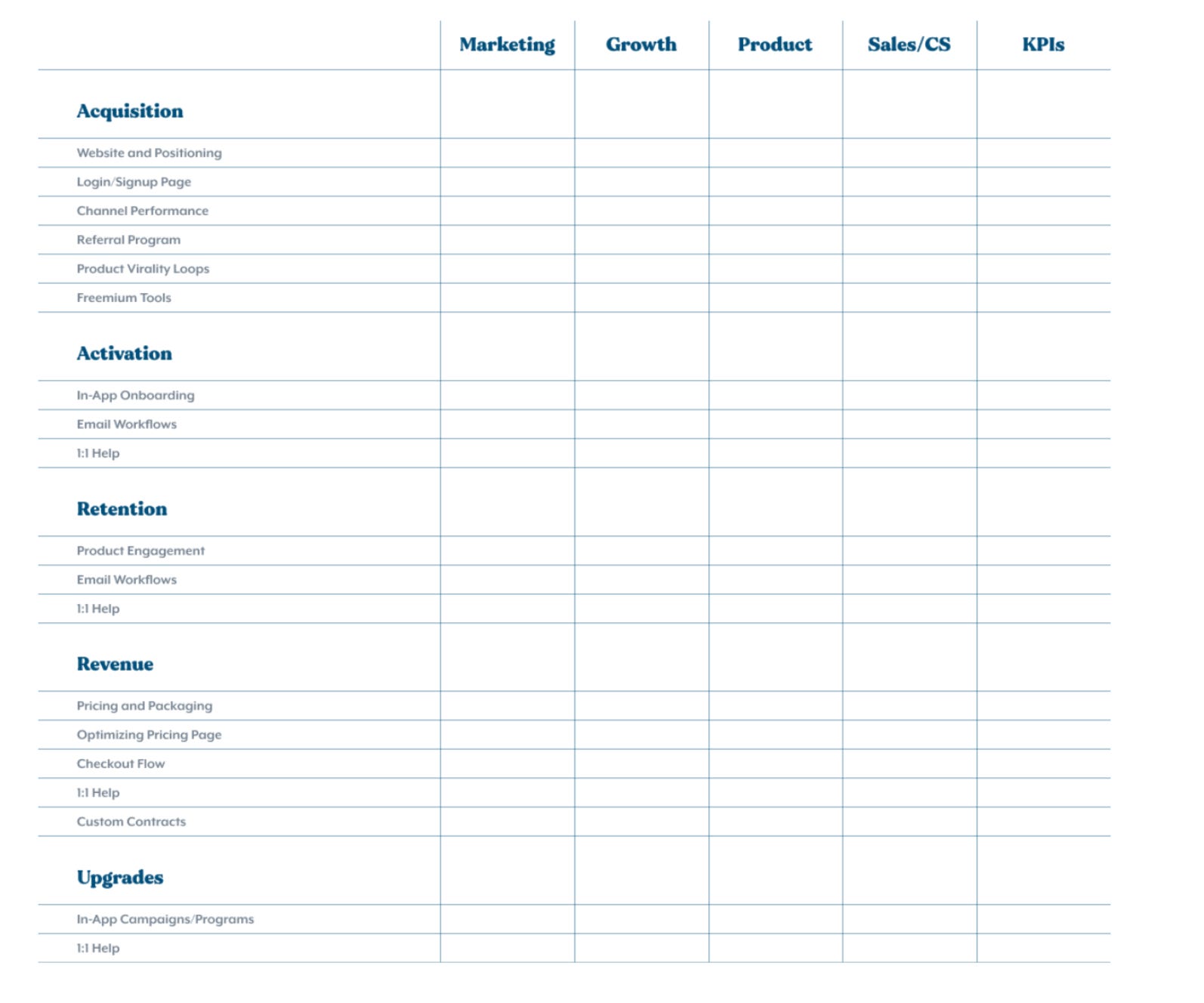
Clear lines on who owns what, how to collaborate, and executive-level support. I’ll often encourage clients to build a RACI matrix for their major growth metrics: who’s responsible, who’s accountable, who’s consulted, who’s informed. Just having that mapped out unlocks a lot of the tension.
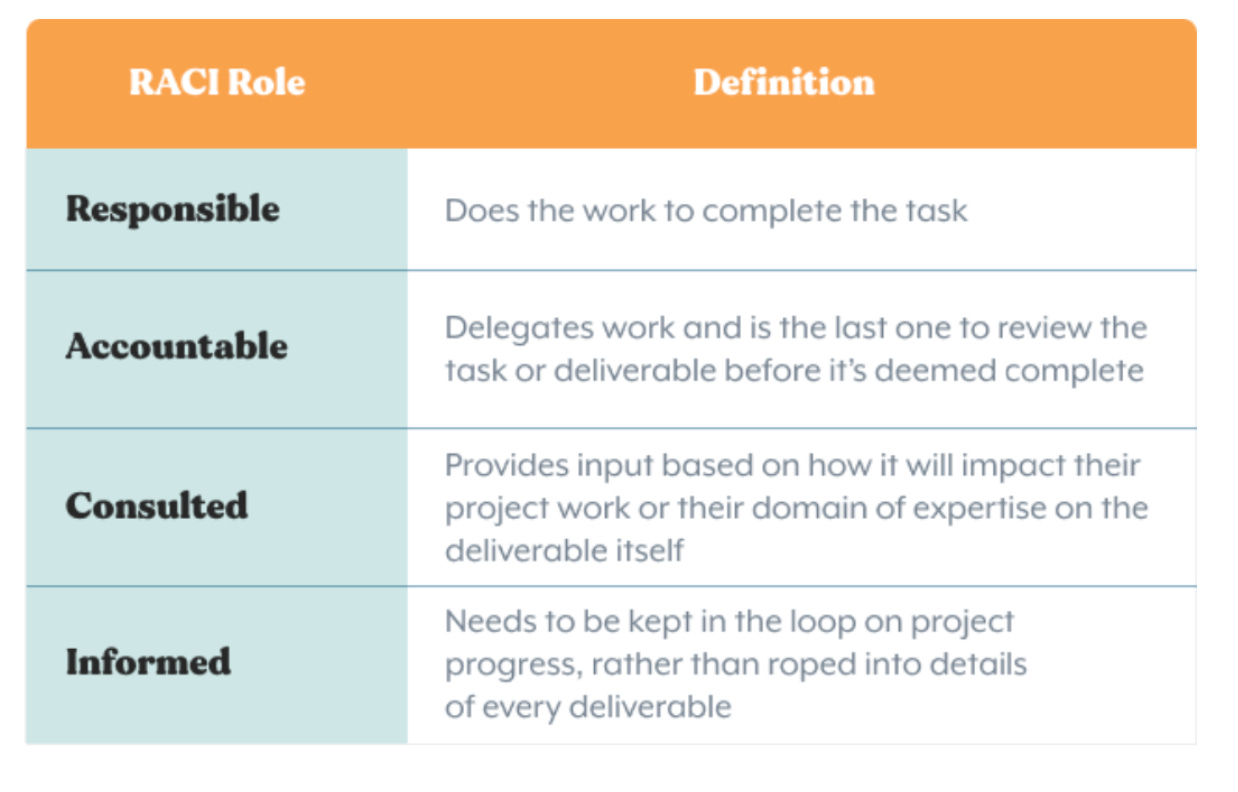
You’ll want to create something like this document below, and fill in with the appropriate letters from the RACI definition above.
If the executive team had been aligned in my example above, the standoff with the product lead shouldn’t have happened at all.
Where to start
What counts as activation.
Where you’re losing users.
Where you’re losing money.
Where the line sits between sales and self-service.
Who owns what.
And if you have accountability for an outcome without ownership over the surface area to get there, that’s the problem to fix first. It’s the hardest of the five to solve, but it makes the other four possible.
Whenever you’re ready, here’s 3 ways I can help you increase your impact and influence in 2026:
Binge my best content about becoming a world-class head of growth on YouTube.
Looking for a peer group to workshop stuff like this in real time? Apply for the Growth Council.
Want 1:1 support on your specific situation? Schedule a coaching consult.
The clear path through all five decisions is probably what i found most useful. You know where users are going, where they’re dropping off, where the money is leaking, which users need sales help, and who owns each part instead of everyone just trying to improve “growth.”
For a new founder, I think the tricky part comes after that. At what point do you stop fixing the journey and start putting more effort into getting more people into it?